In recent years, continuing concerns regarding both the climate crisis and humanity’s impacts on the health of our world’s ecosystems have only increased.
Biodiversity, the measure of all the different unique species on Earth, can also be used as a measure of an ecosystem’s ‘balance’ or overall health.
The United Nations Environment Programme (UNEP) has identified human activity as one of the main factors contributing to biodiversity loss worldwide through the introduction– accidental or otherwise– of invasive species, deforestation, ongoing greenhouse gas emissions and many other pathways.
Irresponsible use of the land and sea, their inhabitants and the resources they provide is doing grave harm to our planet.
Worldwide, however, in ecosystems managed by people indigenous to these endangered lands, many of these pathways to environment degradation don’t exist at all, or are greatly lessened. Indigenous-developed environmental control methods like prescribed burns have been shown to increase environmental health and biodiversity values, as discussed in a 2023 article in the Journal of Applied Ecology.
In addition to this, 2019 study in the journal “Environmental Science and Policy” found that indigenous-managed lands have biodiversity values equal to or in some cases greater than areas protected by non-indigenous communities like the National Parks Service, showing just how vital these traditional indigenous practices have and will continue to be for continuing the fight for our planet’s health.
However, this discussion comes with a very large asterisk. The lands managed by Indigenous communities in the modern day are but a small portion of their original ancestral ranges, if any of their ancestral land remains in their control at all.
For much of known human history, Indigenous communities worldwide have been forced out of their homelands to make room for colonizers, often having their land forcibly taken or sold to people who didn’t know how to care for it in the same way.
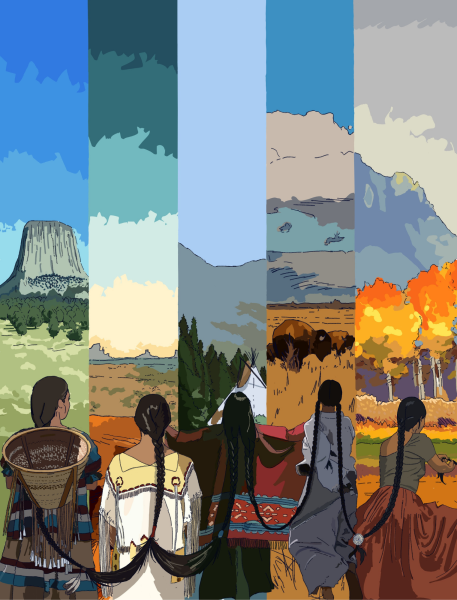
In the United States, Native Americans inhabit only one percent of their original homelands, all because of centuries of colonization, displacement and overall suffering. Their traditions, their homelands, all gone. How does one come back from that?
The wounds accumulated over centuries can never truly be healed, but some recovery has begun, particularly when looking at developments in the ongoing “self-determination era” that first began in the 1960s.
The American Indian Movement (AIM), inspired in part by the Civil Rights movement spearheaded by figures like Malcolm X and Martin Luther King Jr., was one of many indigenous-led groups founded to fight for Indigenous rights– including land sovereignty– after centuries of abuse by the United States government. AIM and other indigenous groups forced the United States to reckon with the violent displacement of native peoples that has left a dark mark on its history.
In recent years, the mission of these groups continues through the Land-Back movement, which has made great progress in reclaiming land back through both purchases and government returns. In a recent example out of California, over 47,000 acres have been returned to the Yurok Tribe, an effort over twenty years in the making. The tribe plans on both restoring and conserving the area and its associated river ecosystem, protecting it for future generations, showing just how powerful land-back projects can be in ecological conservation.
While it may never be possible to fully quantify the losses of indigenous groups worldwide, one thing has become increasingly clear: they deserve to regain sovereignty over their homelands. Research shows that these people know how to care for the environment better than anyone else because of generations of experience and finely developed toolkits for caring for the ecosystems within. And while the bulk of the climate fight should not be on their shoulders– the rest of the world has its own heavy lifting to do– returning their land and allowing them to manage it in the sustainable ways they have been for generations, would be a great first step.