In a 1979 video, Stokely Carmichael (AKA Kwame Ture), a Trininidadian-American Activist, asked a young man–who found violence deplorable–a question that would stop anyone in their tracks: “If you were a slave, and I were your master, and the only way for you to be free was to strike a blow to kill me, what would you do?”
When I heard this, I found myself grappling with the idea of heroism. What would anyone do? Is it even possible to consider morals under such oppression? More importantly, who decides which actions are considered heroic in the first place?
As I reflected on these questions, I realized that the long-standing history of racism and oppression in this country have shaped the narratives of what is deemed “permissible.”
In school, we were taught surface level comprehension of the civil rights era: Brown v Board, Martin Luther King Jr and the Civil Rights Act of 1964. But, the narratives that we are told rarely venture out of this context. Centuries of chattel enslavement, settler colonialism, and Jim Crow are skimmed over, though they were what made these movements necessary and relevant today rather than simply being the “distant past.”
Through these sanitized narratives, our perception of American heroism grows narrow; depicted in a light of patriotism, non-violence and “digestibility.” These narratives comfort the majority, and avoid challenging existing systems. But the cost for this comfort is repression, censorship and a poverty of imagination for what liberation could look like.
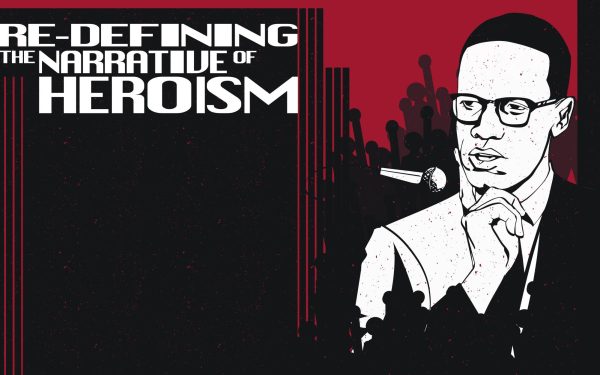
So, what about those who fall outside the conventional frame? For figures like Stokely Charmichael, Malcolm X, or organizations like the Black Panther Party? Their life experiences force us to confront the discomfort of the truth.
According to “The Uncharted Past,” movements such as these, are labeled “radical” since it challenges–and refuses to accommodate–to the fears and expectations of white America. Malcom X’s advocacy for Black nationalism, the Panthers community programs and advocation for self defense (by any means necessary) and even violent revolts such as the Nat Turner Rebellion, were not simply acts of extremism.
Rather, they were a refusal to accept oppression as inevitable. These figures were viewed as a threat because they challenged those who were invested to protect the status quo. It was political repression, not moral clarity, that shaped how these people and movements were remembered.
So when I return to Carmichael’s question, I see it differently. It is not about violence, but the truth. You cannot politely ask the oppressor to stop. Perhaps, heroism begins the moment we stop asking.