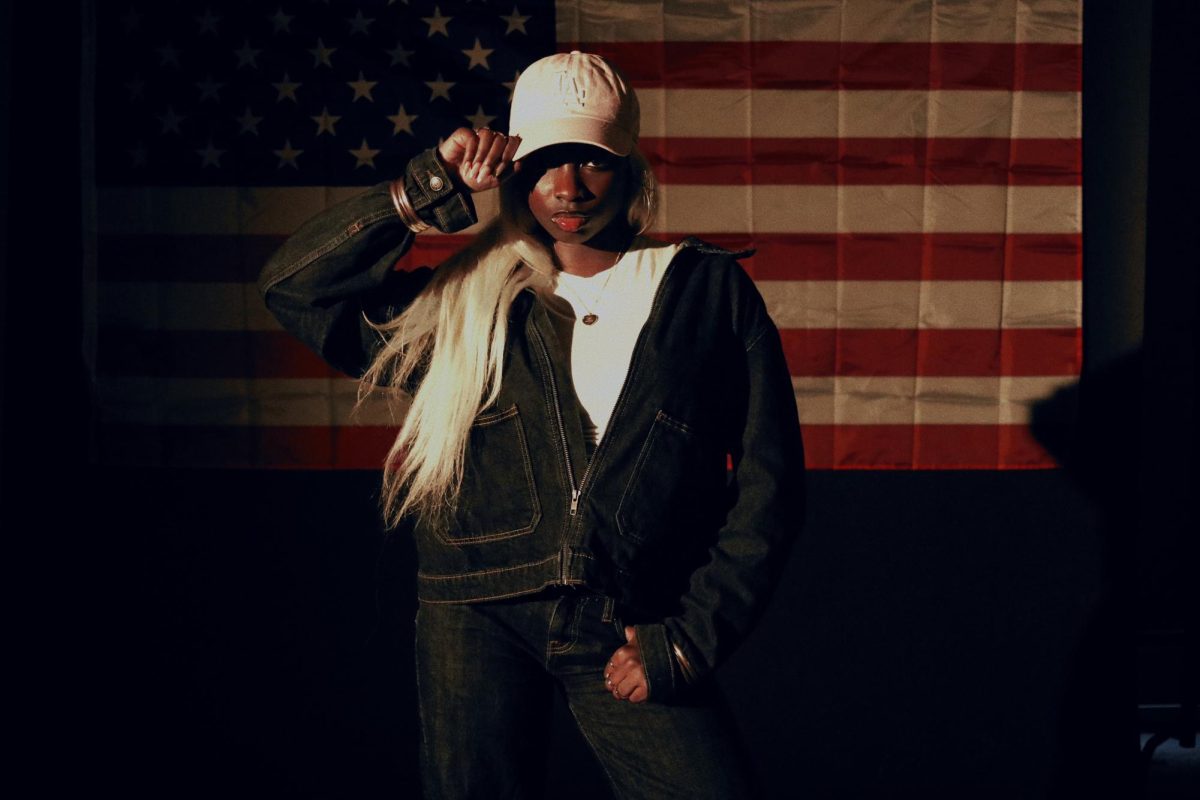
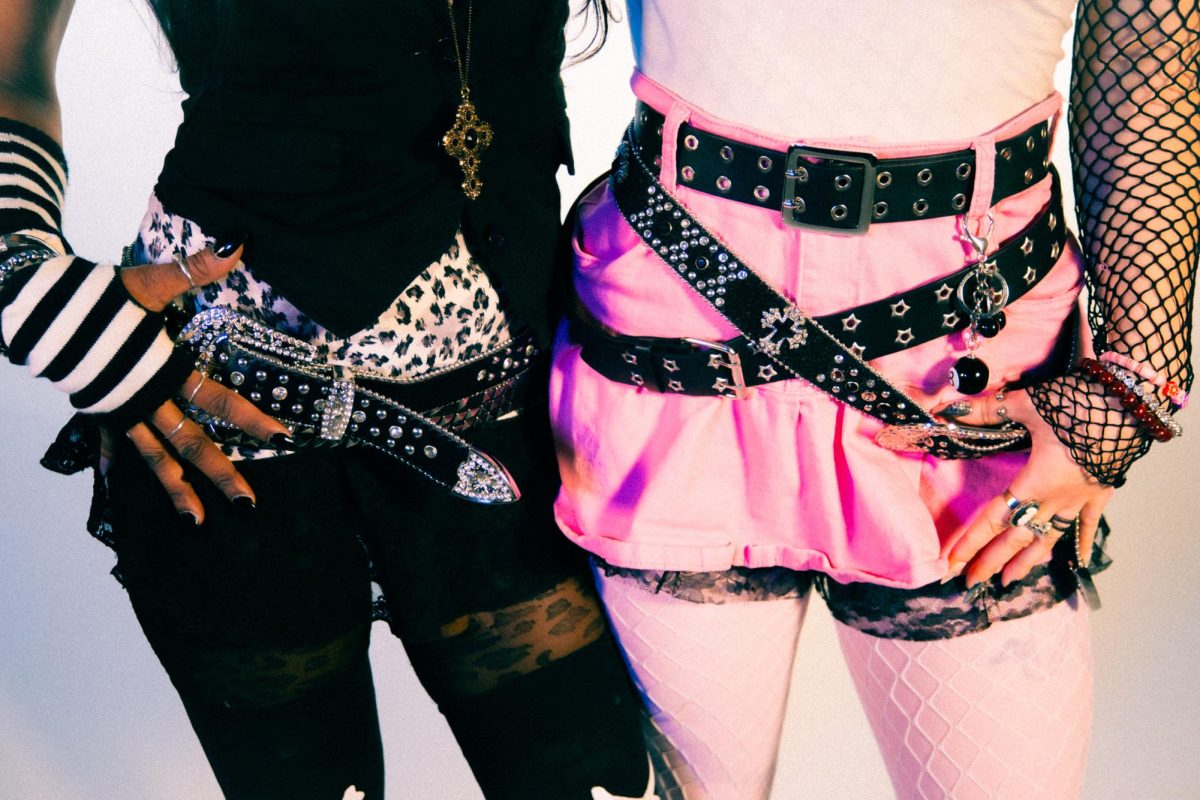
On Nov. 14, the Uumbaji Gallery filled with color, movement and conversation as Black student artists gathered to share their work with the Kent State community. The event marked the first exhibition hosted by Black Art Students United (BASU), a student-led organization established in spring 2025 to uplift and support Black creatives on campus.
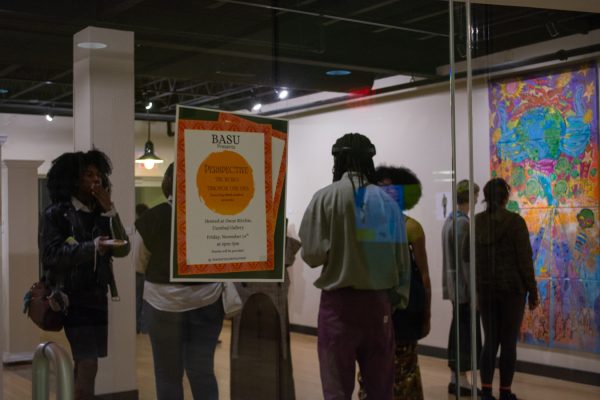
The opening reception, titled “Perspective: The World Through Our Eyes,” featured artwork selected from Black students across campus. For BASU President Elizabeth Brunner, the event reflected the purpose behind the organization.
“The point of creating our club was to uplift Black voices,” Brunner said. “Art is community, and it means a lot to be able to bring Black artists together to talk about their art, display their art and learn from one another.”
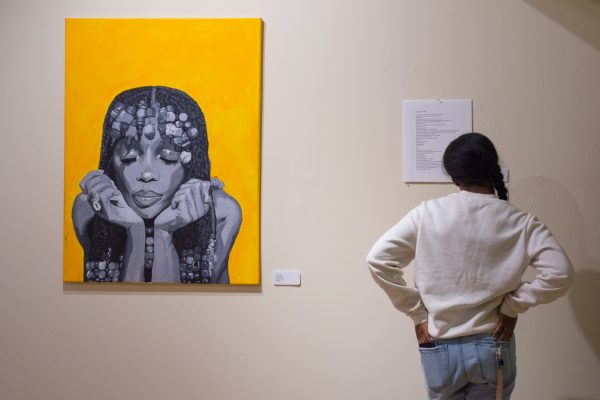
Brunner said creating within a community helps artists grow.
“You’ll never be able to improve if you aren’t learning from other artists and the times around you,” she said.
She hopes the wider campus understands the importance of supporting Black artists.
“Black artists on our campus and outside of our campus are doing really important work,” she said. “Artists reflect their times, and in this time of political unrest and hardship, artists are doing their best to uplift their communities and talk about the hard problems.”
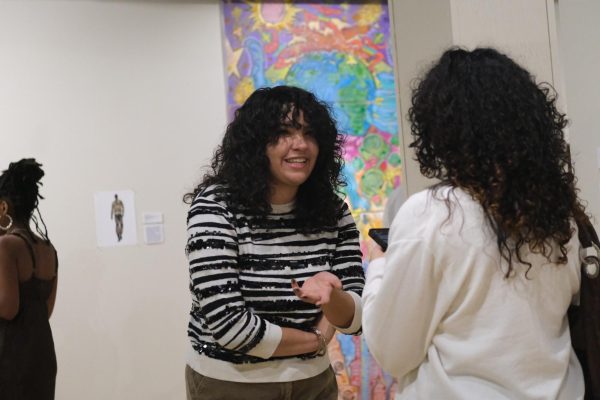
Each artist approached the exhibition with a personal perspective rooted in their own identity, experiences and creative process.
Tim Green, a senior fashion design major, created a design from digital art software inspired by artist Ernie Barnes. Green said Barnes’ athletic imagery and elongated figures shaped the tone of his piece.
“I wanted to look back and find something that inspired me from my own culture,” he said.
Green wants viewers to take away a sense of playfulness.
“Have fun with your work,” he said. “If you’re going for inspiration, pick something you like so you can execute it the way you want.”
Jordan James, a junior fashion design major, presented a sculptural “crater dress” featuring two openings that connect through the interior of the garment. The openings represent the movement of her thoughts and the way her mind shifts from idea to idea.
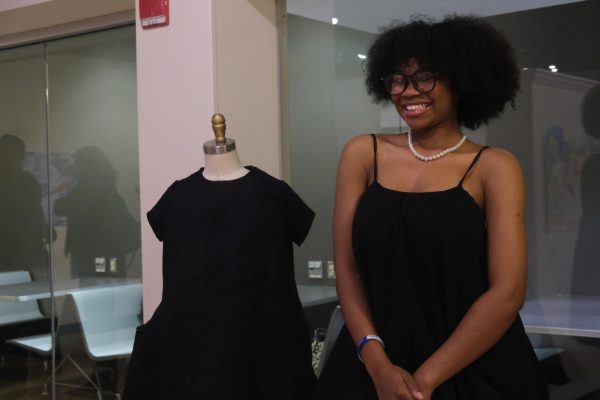
“In creating for this space in the Black community, I really wanted to channel my inspiration from my own mind and seeing what’s expected of me as a Black creator and then doing what I want to do,” James said.
The dress is interactive, and James encourages viewers to place their hands through the openings to understand its concept.
Jesse Davenport, a junior studio art major, drew inspiration from Eckhart Tolle and Swahili spirituality. His clay piece reflects the cycle of destructive thoughts and the grounding that comes from spiritual awareness.
“I love most of my work to have a spiritual aspect,” Davenport said. “I was excited because the thing I love about clay is that your imagination is the limit…”
One goal Davenport had was to challenge the way African spiritual imagery is portrayed.
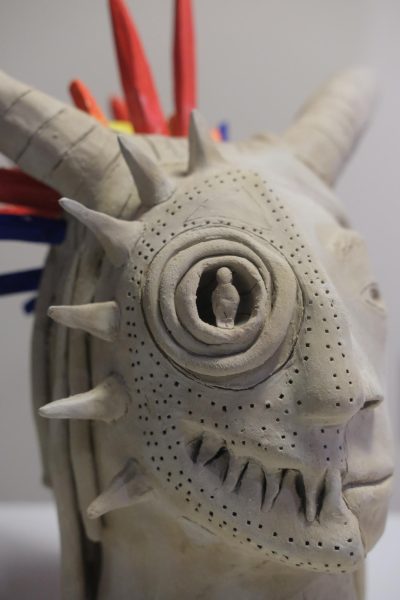
“When shown in the media, it can be seen as, you know, voodoo or dark magic or stuff like that, when essentially it’s a way for us to connect back with our ancestors,” he said. “I feel like I wanted to flip that on its head and kind of give it a new perspective, essentially, through my eyes and my struggles, sometimes that I could face as a Black artist.”
Ajallah Toure, a senior textiles major, created a woven and embroidered piece titled “Stars and Stripes.” Toure used a double-weave technique before cutting, rearranging and embroidering the fabric to build the final surface. As Toure worked through the piece, she realized it resembled a deconstructed American flag.
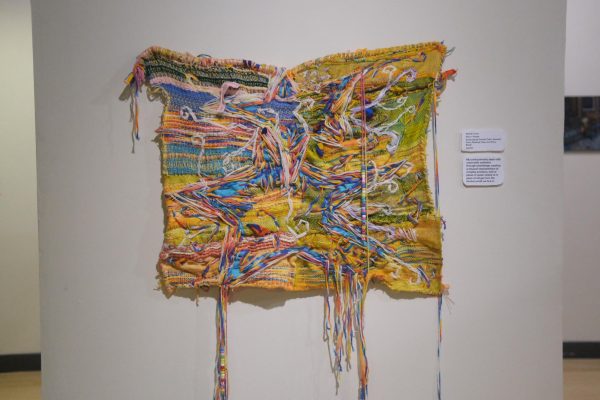
“I think it became just this, like, really intuitive way of working from a non-representational thing to an extremely representational thing,” Toure said. “It lives in the nuance.”
The piece also reflects themes of queer freedom, though the meaning may not be immediately visible to all viewers.
“It doesn’t read that way for everybody, and that way, it makes it safe and it makes it approachable for those people who truly understand what it means,” they said.
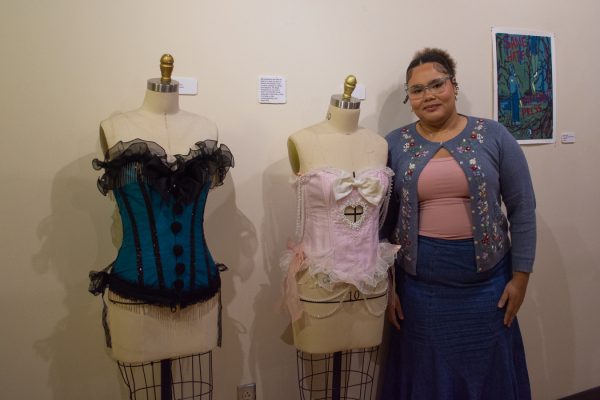
Across the exhibition, each piece offered a personal exploration of process, identity and experimentation. While each artist spoke to their experience as a Black creator, their work extended beyond expectation or stereotype. The pieces showcased their individual technical skill and the diverse ways they approach inspiration.
BASU’s first exhibition underscored the importance of creating space for Black artists at Kent State. The organization plans to continue building community through future events, including a Black artist’s lecture series launching next semester.
Students can follow @basu_kent on Instagram for updates.