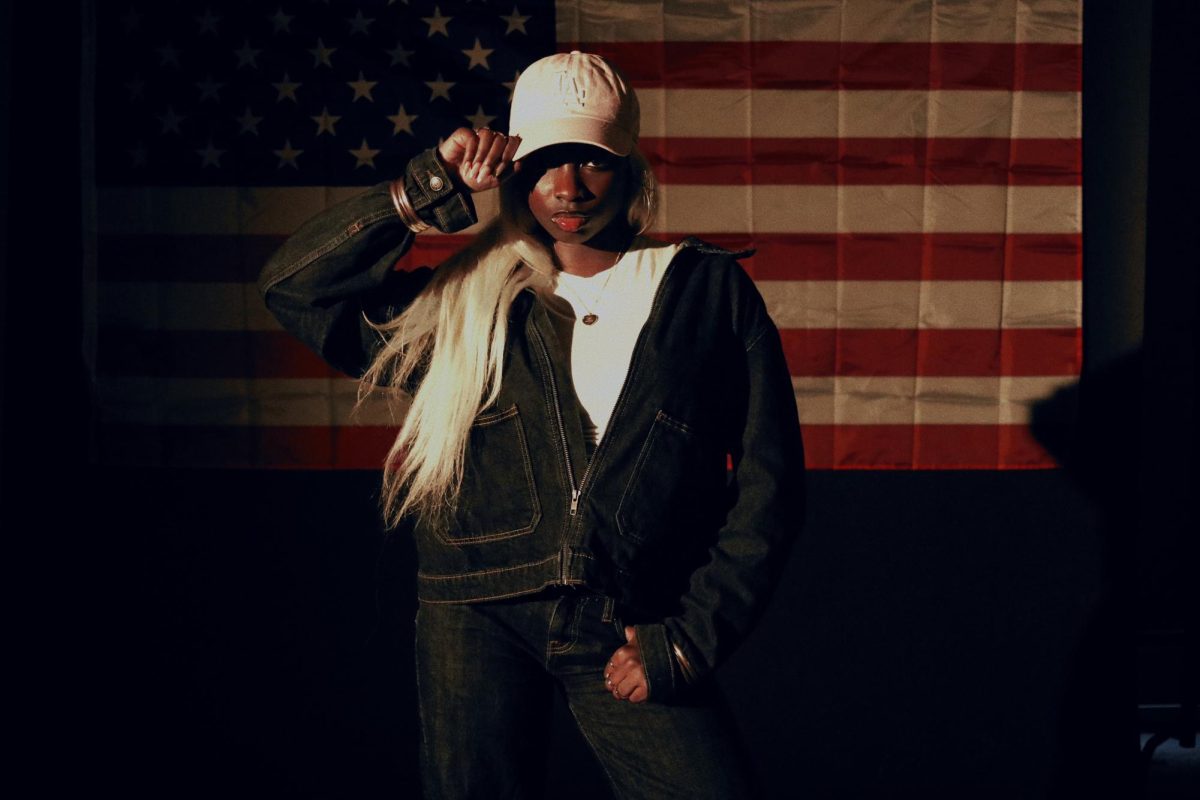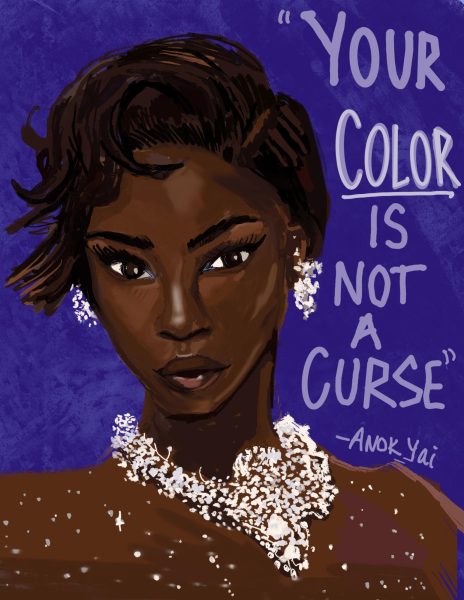
This illustrated portrait of Anok Yai does not simply portray a model. Her deeply melanated skin, highlighted with beauty and purpose, tells a story that goes beyond the runway. Today, Anok has cemented her impact as a supermodel within the fashion industry.
Her path to self-acceptance began with a tense relationship with her complexion. Now, her experience is changing the narrative in an industry that was once not susceptible to change.
Anok Yai, originally from South Sudan, was first discovered by a picture of her on Instagram. The post quickly gained attention for her striking features and regal complexion. By the next morning, Anok was signed and brought into an industry that had been struggling to recognize dark-skinned women as a part of the beauty standard (and not just an exception).
Although Anok Yai’s story may sound like a familiar fairytale, but she experienced years of internalized self-hatred for her looks and complexion, which was influenced by limited representation and colorism in the media.
Before emerging in the fashion industry, Anok struggled with feelings that many dark-skinned women relate to. She once expressed that she believed her skin color was a curse.
That belief did not just appear out of self-doubt. It was shaped by a society that frequently upholds lighter skin complexions as more desirable to wider audiences. Individuals with darker complexions are often put aside or left out entirely of conversations on beauty.
Growing up surrounded by beauty standards that never resemble you can condition young girls to see their own complexion as something to be ashamed of and nothing more.
Fast forward to 2025, when Anok Yai was named Model of the Year, an accomplishment that was more than a title. It showed that beauty is not just a single standard and that dark-skinned women deserve to be seen–seen not just for their beauty but for their resilience and confidence to step into a space that was once denied to them.
Anok’s presence in the industry is providing women and girls with representation that she did not grow up with.
Anok Yai’s experience encourages viewers to change their fixed mindsets on their self-image and worth.
It is important to know that this newly formed mindset does not at all erase the internal and external challenges dark-skinned women continue to face. Representation becoming mainstream does not end colorism in everyday life. However, it prompts conversations that are needed to overcome these challenges.
Anok’s journey highlights representation and the power it holds, even while subtle. Sharing her story and experiences has helped the industry reanalyze beauty standards and look past their historical connection to whiteness.
It has demanded society to reassess how we define beauty and worth. They remind us that something that could have once been considered a disadvantage, can become the source of one’s inner strength and pride.
Anok Yai’s story became one that has stuck with dark-skinned women. We are witnessing the evolution of an industry, as the shade that was once sidelined now sets the tone.